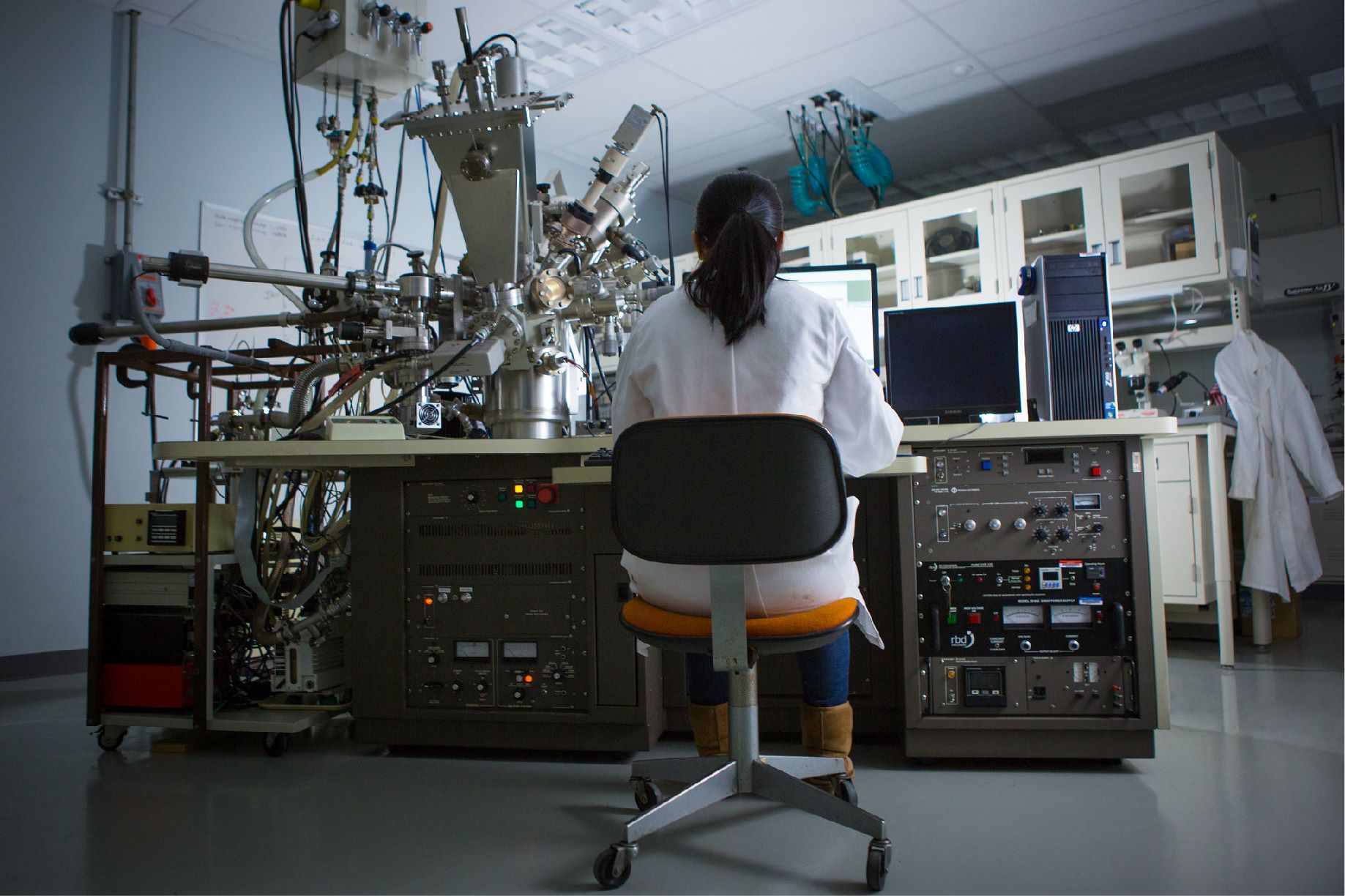
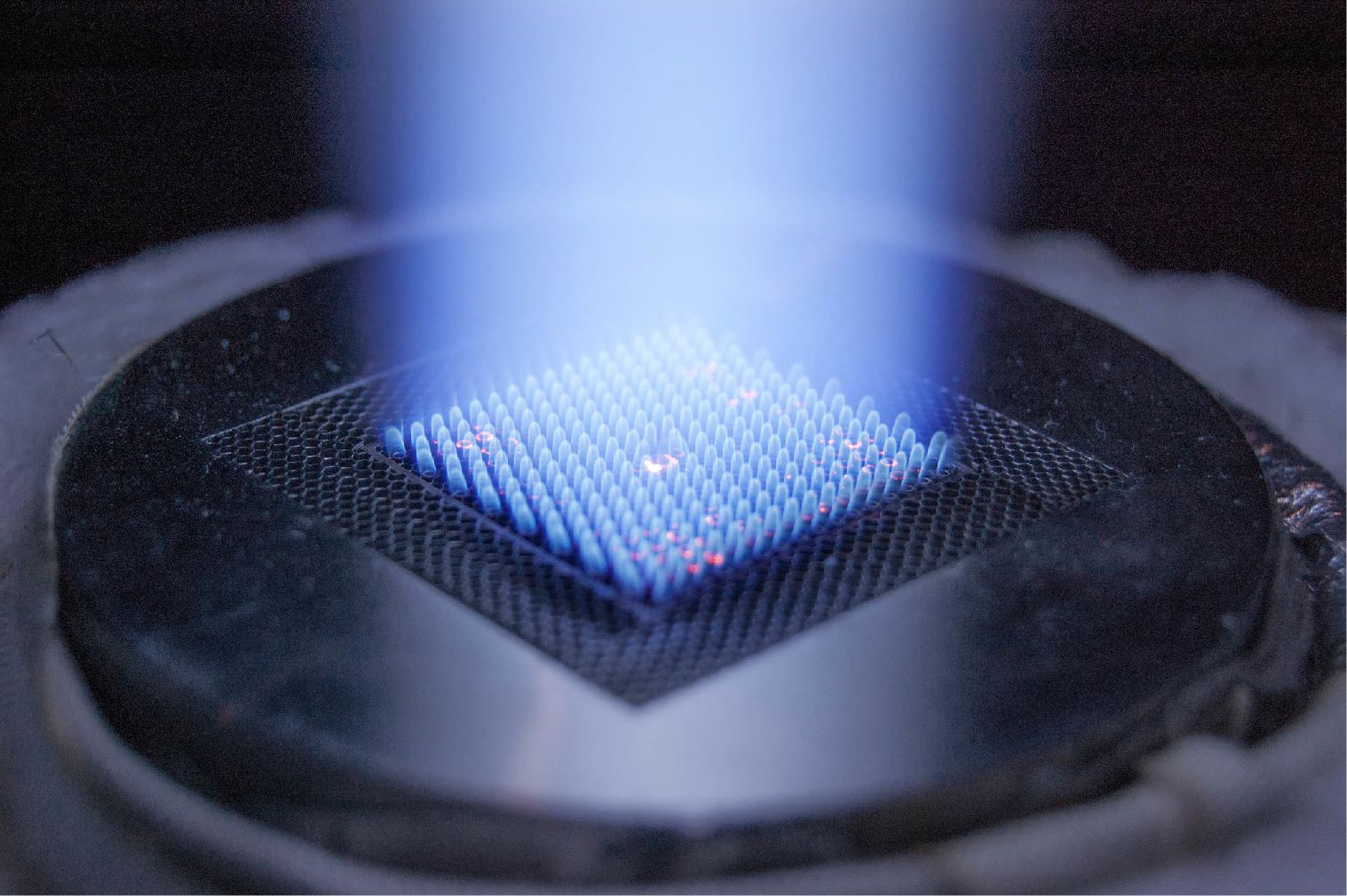
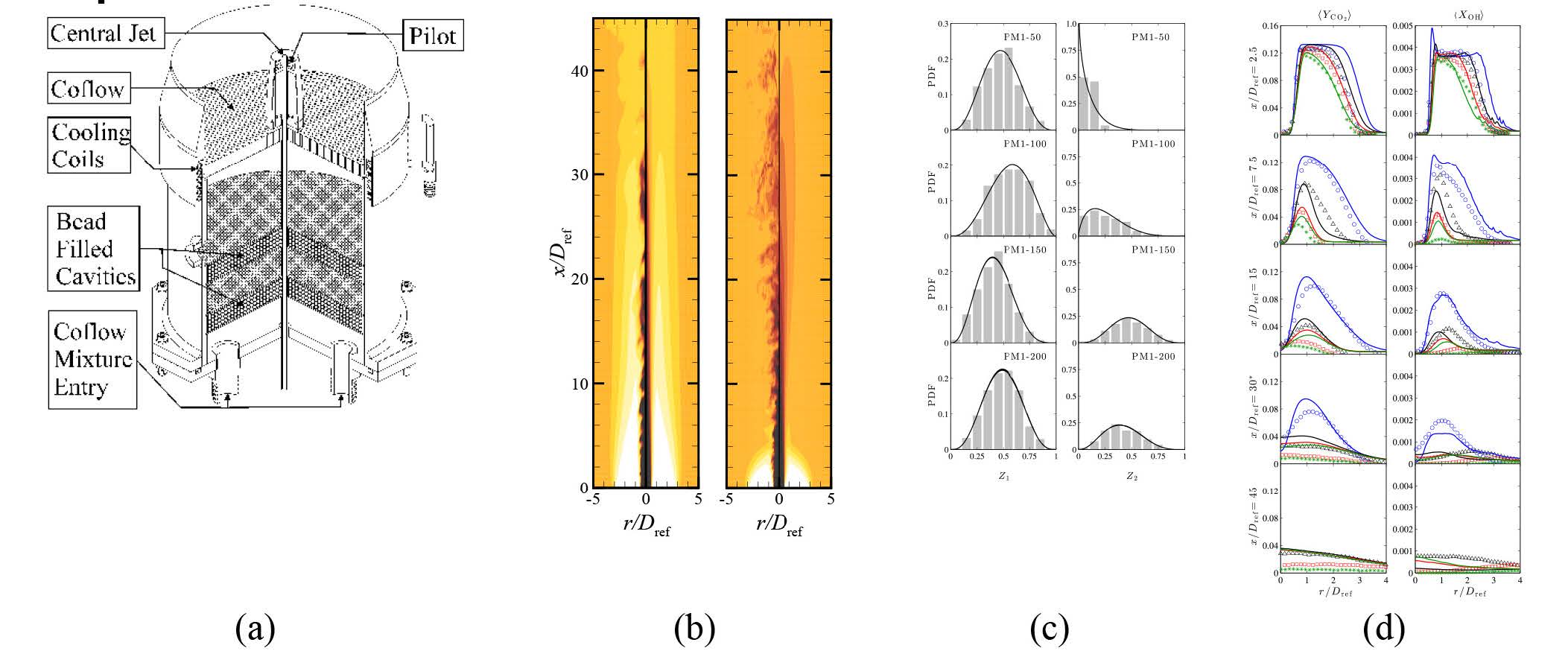
The scope of this University of Michigan computational effort addresses the development of a fully validated large-eddy simulation (LES)-modeling capability to predict unstable combustion of high hydrogen content (HHC) fuels. To incorporate effects of preferential diffusion, pressure variations, and variations in mixture composition, an unsteady flamelet-based LES combustion model will be extended. The integrated LES-validation effort includes (1) an a priori analysis of critical modeling assumptions using a Direct Numerical Simulation (DNS) database of jet-in-cross-flow configurations, and (2) a posteriori model validation in LES application of a swirl-stabilized gas turbine combustor. The LES-combustion model will be used to develop detailed simulations to characterize facility-induced nonidealities in flow-reactor experiments. Effects arising from high-Reynolds number turbulence transition, mixture stratification, and other mechanisms associated with turbulence/ chemistry interaction on the autoignition behavior will be quantified through parametric calculations. The information gained from these efforts will be used to develop a low-order model that can be utilized for chemical-kinetics investigations and for guiding and improving future flow reactor designs in order to reduce facility effects.
The experimental effort includes high-pressure measurements of HHC fuel combustion in a dual-swirl gas turbine combustor, development of a comprehensive experimental database for LES model validation by considering stable and unstable gas turbine operating conditions, and obtaining improved understanding about fundamental combustion-physical mechanisms that control flame-holding, liftoff, and flashback for HHC fuels. A range of pressures, HHC fuel compositions, and equivalence ratios will be investigated experimentally.
Principal Investigator
Matthias Ihme
mihme@umich.edu
Project Benefits
This project will focus on the development of a computer model that can predict unstable combustion of high hydrogen content (HHC) fuels. Improving large-eddy simulation (LES) models for HHC fuels will lead to hydrogen combustor designs that produce fewer emissions at higher temperatures. Specifically, this project will develop an improved LES model by analyzing critical modeling assumption and validate the model by conducting high pressure measurements of HHC fuel combustion in a dual-swirl gas turbine combustor.
Website
Regents of the University of Michigan
http://www.umich.edu/