Business

Business
The objectives of this project are to:
Researchers have completed detailed foaming studies to optimize processes and minimize upsets. Studies also were conducted of the health, safety, and environment (HSE) aspects of coking sludge disposal, drum settling, and poor drainage causing hotspots. The results of these studies will be used as input to enhance computer programs developed for coking process optimization. These resulting computer models will be tested against member company refinery data.
Meanwhile, novel designs for removing hydrogen sulfide from furnace gases are to be studied to establish the feasibility of minimizing or eliminating sulfur in the liquid products.
University of Tulsa (TU)
Tulsa, OK
Delayed coking evolved steadily over the early to mid-1990s. Its purpose is to enable refiners to convert high-boiling, residual petroleum fractions to light products such as gasoline. Coking is the most energy-intensive process in a modern refinery. Large amounts of energy are required to heat the thick, poor-quality petroleum residuum to the 900-950 F. required to crack the heavy hydrocarbon molecules into lighter, more valuable products.
Coke production has increased steadily over the last 10 years, with further increases forecast for the foreseeable future. A major driving force is the steady decline in crude quality available to refiners. Crude slates are expected to grow heavier and with higher sulfur contents, while environmental restrictions are expected to significantly reduce the demand for high-sulfur residual fuel oil. Refiners face the choice of purchasing light sweet crudes at a premium price or adding bottom-of-the-barrel upgrading capability, through additional new investments, to reduce the production of high-sulfur residual fuel oil and increase the production of low-sulfur distillate fuels. Because of relatively moderate intermediate investment and operating costs, delayed coking has increased in popularity.
Despite its wide commercial use, only a relatively few contractors and refiners are truly knowledgeable in delayed-coking design, so that this process carries with it a "black art" connotation. Until recently, expected coker yields were determined by a simple laboratory test of the feedstock. As a result of researchers' prior work, a process model was developed that, with additional work, could be used to optimize existing delayed cokers over a wide range of potential feedstocks and operating conditions.
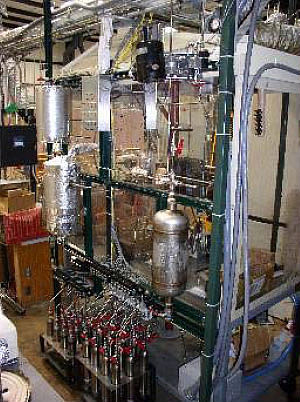
TU draws on its downstream expertise and the support of 12 member companies and DOE to understand the coking process. Through TUDCP this gamma densitometer system provides a method to visualize reactions occurring in the coke drum at 930 F., allowing the study of both morphology and foaming.
This research project is developing robust screening and process optimization models that result in energy savings as well as maximizing product yields. Increasing yields in turn enhance refinery margins by reducing coke contaminants-making the resulting coke better suited for commercial use in the metals and chemical industries-as well as reducing sulfur in gasoline and diesel fractions to meet stringent EPA requirements.
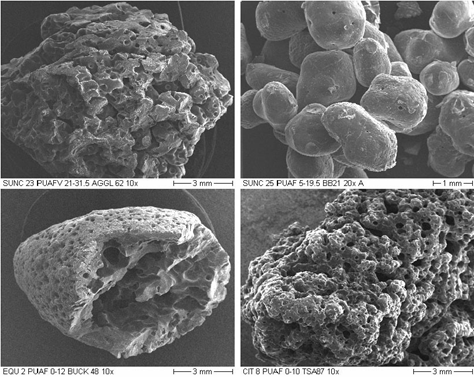
This work also has resulted in a better understanding of how coke morphology is affected by feedstock and processing parameters. Furthermore, the project results allow for predicting shot-coke formation more accurately and for minimizing HSE-related concerns by providing insight as to why settling, poor drainage, and hotspots occur in coke drums.
Foaming studies are providing better understanding of the foaming process and will result in refinery cost savings through optimized use of antifoams. For example, reducing the amount of antifoam in the coke drum by $0.10 per ton would save refiners $5 million per year. In the JIP project, new research areas are focusing on ways of increasing liquid volumes produced by 20%, changing morphology to increase product quality, and testing non-silicon-based antifoams that would save millions of dollars by not fouling catalysts.
Project Summary
A significant amount of data and model development has occurred from the prior small-scale studies; however, the pilot unit study outcomes are the basis for the model development effort.
Studies have provided an understanding as to:
A unique system was developed that allows one to see coke, liquid, and foam in the coke drum. Upon completion of the coking process, drum contents are steam-stripped. The gamma densitometer traces illustrate how the loss of mass occurs during the stripping process. Material loss resulted in the coke bed slumping by about 10%. This slumping actually caused an increase in the coke bed density, mostly at the bottom of the bed, but to a lesser extent in the middle. After steam-stripping, water injection is increased in a controlled manner to cool drum contents. These data were used to develop a quenching model.
Models, whose robustness is being updated continually, have been developed for screening, process optimization, kinetics, and quenching. In general, because the data are scaled up to industry data, refinery coking processes are being predicted successfully.
Project Results
The TU Delayed Coker Project (TUDCP) has a "one-of-a-kind" pilot plant that provides a method to visualize, via a gamma densitometer, coke drum reactions. This allows study of coke morphology and foaming. The data produced have resulted in a quench model and a determination of what causes hot spots. The project also has conducted studies resulting in increased liquid yields, as well as the ability to change coke morphology.
This project is in its final year. Sponsors include Baker-Petrolite, ChevronTexaco, Citgo, ConocoPhillips, GLC, KBC, ExxonMobil, Foster Wheeler, Shell, Marathon, Suncor, and DOE.
$1,020,000 (41.8%)
$1,421,000 (58.2% of total)
NETL-Betty Felber (phone; 918 699 2031 email: betty.felber@netl.doe.gov)
University of Tulsa-Michael Volk (phone; 918 631-5127 email: michael-volk@utulsa.edu)