Business

Business
The goal of the project is to develop, test, and field demonstrate a remote sensing methane (CH4) detector for use on aircraft and vehicles to detect leaks along midstream infrastructure of the natural gas supply chain.
Princeton University, Princeton, NJ 08544
American Aerospace Technologies, Inc., Conshohocken, PA 19428
Fugitive CH4 leaks from the natural gas supply chain to the atmosphere mitigate the climatic benefits of switching away from other fossil fuel sources, but large measurement challenges exist in identifying and quantifying CH4 leak rates along the vast number and type of components in the natural gas supply chain. This is particularly true of the “midstream” components of gathering, processing, compression, transmission, and storage. In contrast to sampling well pads where spatial length scales are on the order of 10 m, the length scales of midstream components are immense. Nearly 500,000 km of transmission pipelines form a complex network across the U.S., and distributed at various points along these networks are another 700,000 km of gathering pipelines, 600 processing plants, 1,400 transmission compressor stations, and 400 underground storage units nationwide.
The large areal and linear extents of midstream infrastructure create sampling challenges. Mobile laboratories are limited to the road network and favorable (downstream) wind directions when, for example, sampling processing/compressor stations. Ground‐based measurements and tracer approaches also require favorable meteorological conditions. Because significant amounts of CH4 are emitted into the compressor station exhaust, the warmer and more buoyant plumes often will not be captured by ground‐based techniques.
To address the plume lofting and large length scales for midstream sampling, this project will develop and deploy a novel remote sensing CH4 sensor from either light aircraft or a mobile laboratory. This will involve sensor refinement, field testing, and algorithm development; validation experiments on a vehicle and then aircraft with controlled releases of CH4; and flights along pipeline corridors in the Mid‐Atlantic and Marcellus Shale region to demonstrate commercial readiness.
.
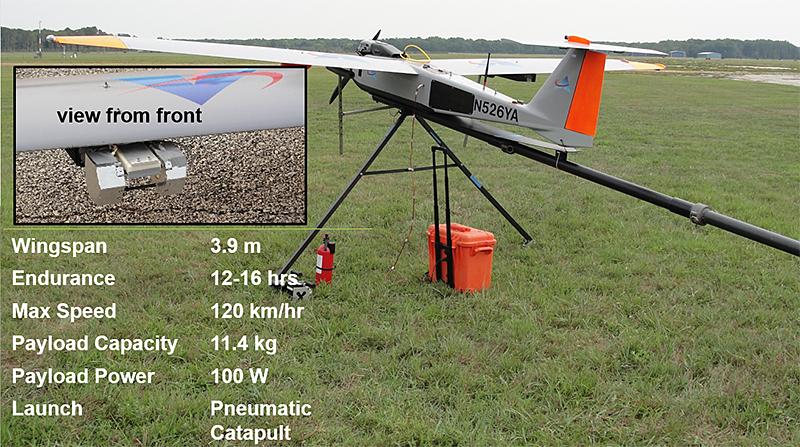
The key innovation is heterodyne enhanced chirp modulated chirped laser absorption spectroscopy (HE‐CM‐CLaDS), an approach that uses optical dispersion rather than absorption to detect atmospheric CH4. Instead of detecting changes in light intensity as in an absorption-based measurement like all existing optical sensors, HE‐CM‐CLaDS detects the phase shift of laser light resulting from optical dispersion. One of the key advantages to this approach is its strong signal intensity, a feature that is critical for a backscattered approach where near‐infrared light is collected from a wide range of surfaces and ground cover. Remote standoff detection means the technique will be capable of deployment on a vehicle or aircraft for large area scanning such as an overflight of a pipeline corridor or around gathering or compressor stations. Finally, HE-CM-CLaDS provides a range‐resolved signal that allows for 3D tomographic images with appropriate sampling/scanning design.
Because the HE‐CM‐CLaDS sensor can be used to send trained personnel to a specific, targeted pipeline site to fix a given leak, the anticipated benefits are saved labor and travel costs, improved pipeline safety, and reduced pipeline explosions, which will result in fewer injuries/deaths and less property damage. This will benefit pipeline companies and operators by mitigating costs associated with fines, liability, and legal fees. In addition, industry will benefit from system-wide recovery of otherwise lost product. Finally, by providing a remote sensing leak detection technology for companies, leaks along the natural gas supply chain will be mitigated more efficiently and less CH4 (and other associated hydrocarbons) will escape into the atmosphere, resulting in improved air quality and a reduced climatic footprint.
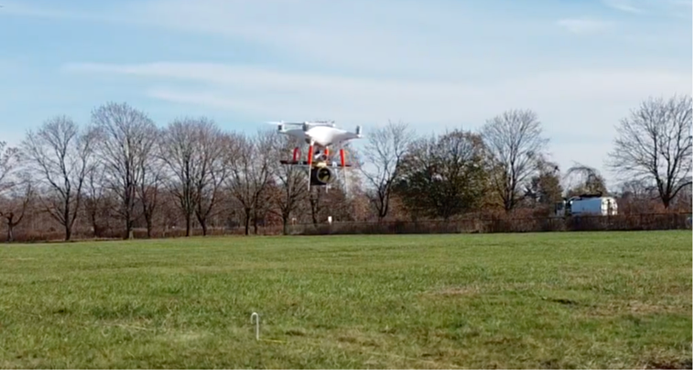
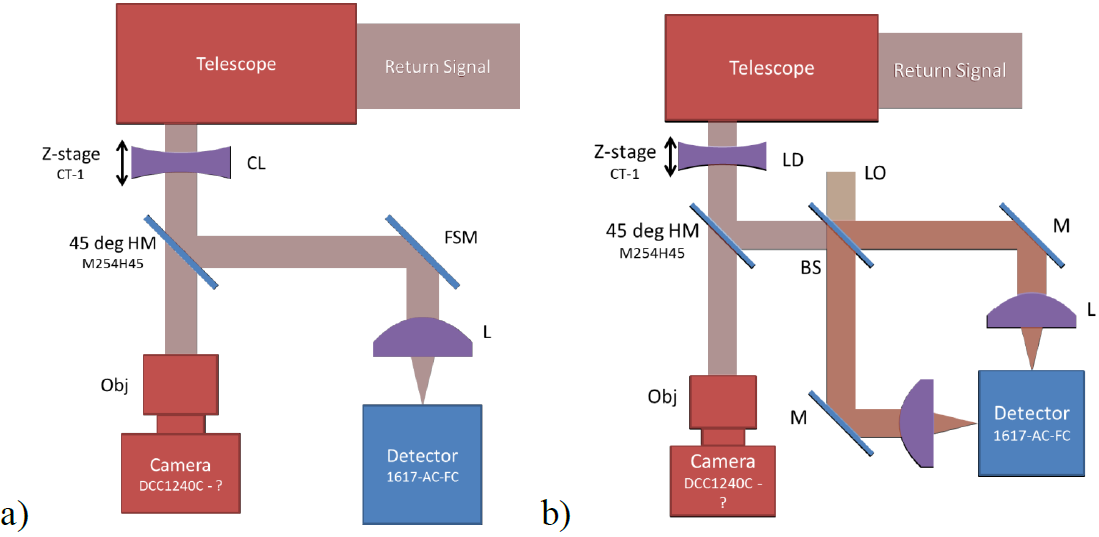
The project was terminated early per the request Princeton University. Task 8.0 – Airborne flight measurements which involved using the sensor with a small unmanned aerial system to detect CH4 leaks along petrochemical facilities such as a pipeline corridor, compressor station, or refinery did not occur. Submission of the final project report is pending.
$1,141,204
$285,299
NETL – Robert Vagnetti (robert.vagnetti@netl.doe.gov or 304-285-1334)
Princeton, University – Dr. Mark A. Zondlo (mzondlo@princeton.edu or 609-258-5037)