Business

Business
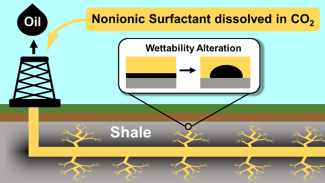
Technology developed by NETL and the University of Pittsburgh advances enhanced oil recovery in unconventional shale formations. The mechanism changes the oil from tightly held to the rock to beading up for improved release from shale formations that have already been hydraulically fractured.
NETL researchers and their partners developed a new approach that involves dissolving small quantities of low-cost surfactants into carbon dioxide (CO2) to increase oil production from challenging, unconventional formations, such as shale, tight reservoirs and others, in which hydrocarbons are trapped in layers of subsurface rock.
“Primary oil recovery from hydraulically fractured unconventional formations is typically just between 3% and 10%,” said NETL chemist Angela Goodman, a nationally recognized expert in her field with 24 years of experience in geologic systems. “Our approach, developed in partnership with the University of Pittsburgh, establishes an additional oil recovery mechanism to increase production from unconventional reservoirs and ensure a strong domestic supply of reliable, affordable energy for the nation.”
NETL and the university recently received a U.S. patent for the enhanced oil recovery (EOR) technology. EOR is the process of extracting remaining oil from a reservoir after primary and secondary recovery methods have been completed.
The technique developed by Goodman and her colleagues involves injecting supercritical CO2, with commercially available surfactants dissolved in the CO2, into shale. A family of chemical compounds, surfactants change surface properties such as wetting and interfacial surface tension between liquids and solids.
In this case, the surfactant was selected to alter the wetting properties of the oil-bearing rocks from oil-wet to CO2-wet. In chemistry, wettability is the ability of a liquid to spread over the surface of a solid. Oil-wet rocks imbibe oil, a process often described as the absorption and adsorption of fluids into the pore spaces of rock formations.
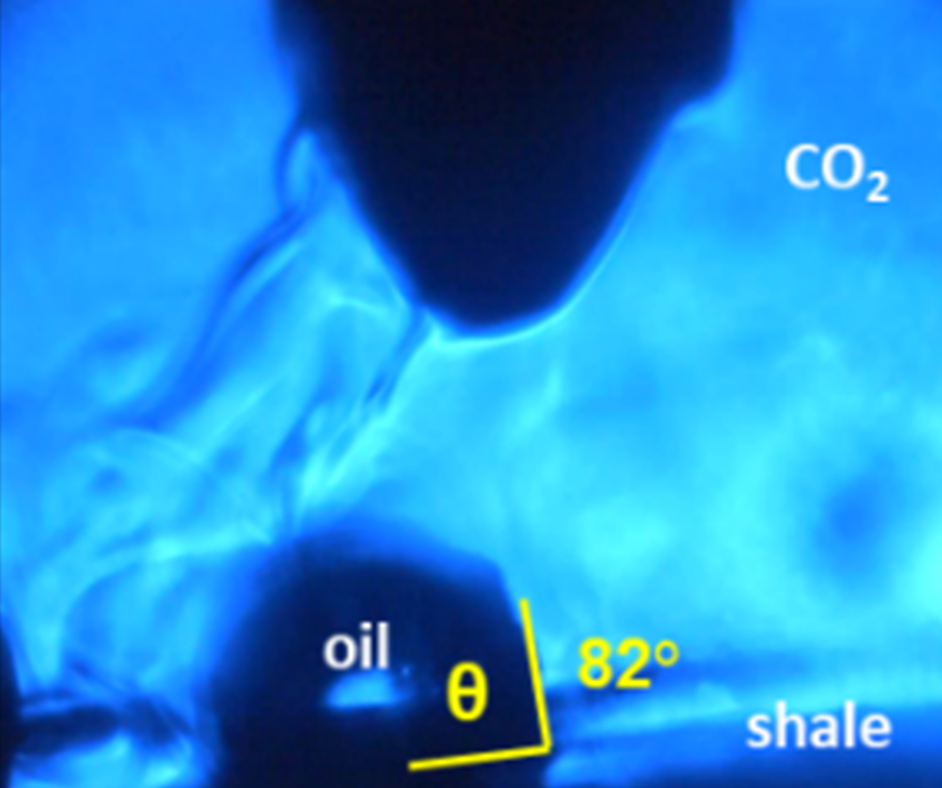
EOR is far more challenging in shale than in conventional formations due to the low permeability (a material’s ability to allow the passage of fluids through its structure) of shale formations and the oil-wet nature of the rock. The patented approach changes the wetting properties of the oil-bearing rock so that the remaining oil beads up and is released from the fractured microscopic shale pores for recovery.
To validate their process, researchers injected CO2 and surfactants dissolved in CO2 into unconventional rock cores at the same high-temperature, high-pressure environments found in the subsurface to demonstrate how they permeate tight shale formations and attain the shift in wettability.
“Advanced capabilities at NETL and University of Pittsburgh enabled us to complete these laboratory-scale experiments using unique equipment that replicates real-world conditions,” said Robert Enick, a professor and assistant chair of research at the university’s Swanson School of Engineering.
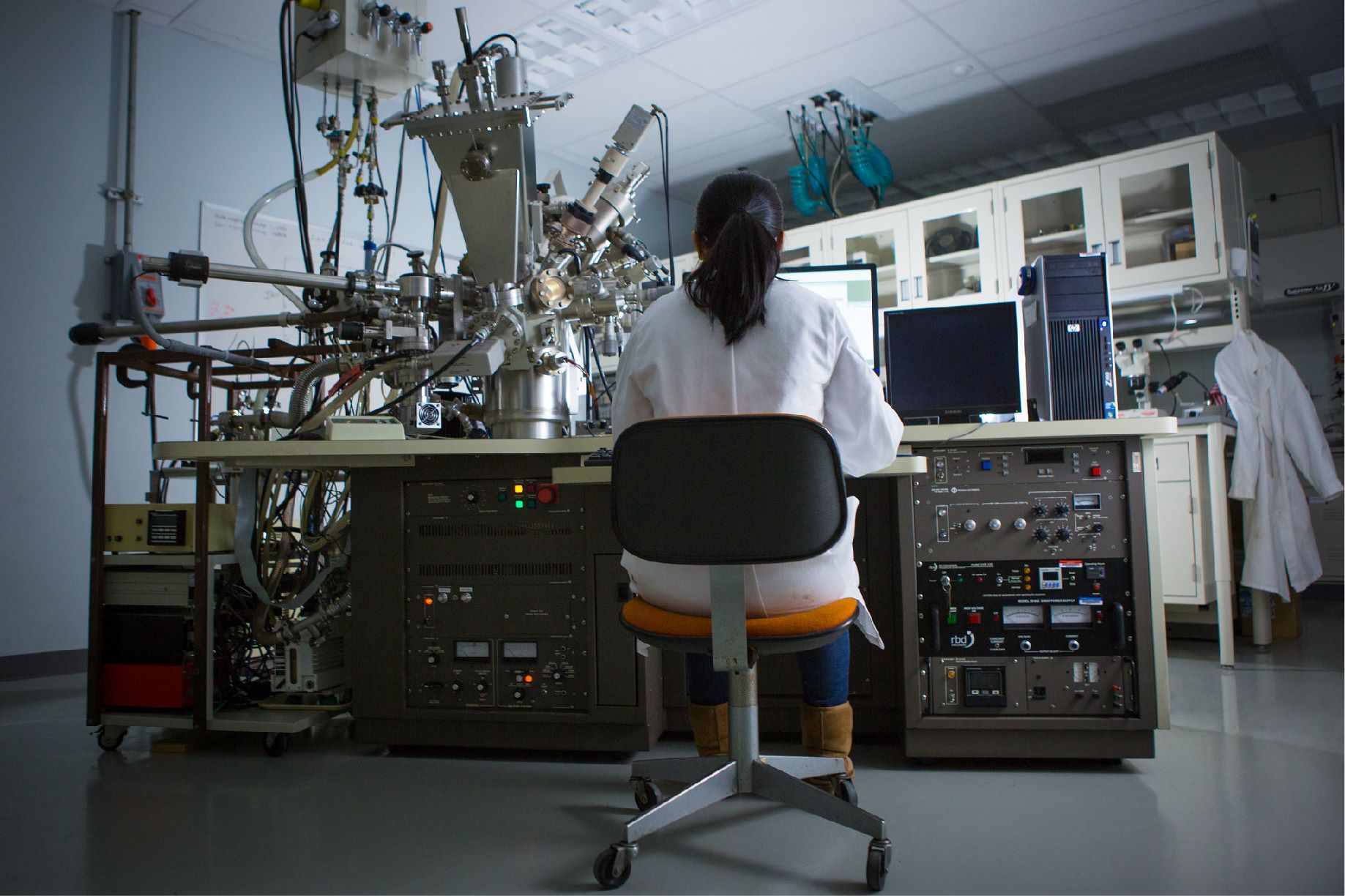
At NETL, those capabilities are housed in the Geological and Environmental Systems (GES) directorate. Equipment in the GES can be used to replicate extreme subsurface environments and generate laboratory-based huff n’ puff oil extraction measurements while benchtop nuclear magnetic resonance imaging studies are completed to investigate dynamic processes inside rock cores.
In a series of lab experiments, the team placed oil-saturated shale cores in a pressurized cell and injected them with CO2 and surfactants dissolved in CO2 at 80 C and 4,000 pounds per square inch. The researchers recorded the highest oil recovery of 75% when the surfactant was dissolved in CO2 compared to 71% by pure CO2 alone.
Given the scale of the oil retained in fractured formations, these four additional percentage points correspond to substantial volumes of oil.
CO2 and surfactants have been used in conventional and unconventional EOR for years. However, no field operation has dissolved small (0.01 to 0.1 weight percent) amounts of surfactants into CO2 to increase oil production by changing the wetting properties of unconventional formations.
“The work completed by NETL and the University of Pittsburgh shows we can use surfactants dissolved in supercritical CO2 to achieve better EOR results,” said NETL researcher Deepak Tapriyal.
Cost is a significant driver for the oil industry, with higher costs increasing consumer prices. “The surfactants we used add only $2 to $6 to the cost of one ton of CO2 for enhanced oil recovery,” said Goodman, who was recognized in 2024 in a Stanford University report listing the world’s top 2% of scientists for career-long impact.
NETL is also working closely with the Energy & Environmental Research Center at the University of North Dakota to test the technology in the Bakken Formation, one of North America’s largest oil reserves.
“The Bakken’s rock layers feature low permeability, making traditional oil extraction methods ineffective. Our new technology offers a cost-effective tool to address low permeability of subsurface shale by altering wettability to expand oil recovery in the Bakken and other formations,” Goodman said.
NETL is a U.S. Department of Energy (DOE) national laboratory dedicated to advancing the nation’s energy future by creating innovative solutions that strengthen the security, affordability and reliability of energy systems and natural resources. With laboratories in Albany, Oregon; Morgantown, West Virginia; and Pittsburgh, Pennsylvania, NETL creates advanced energy technologies that support DOE’s mission while fostering collaborations that will lead to a resilient and abundant energy future for the nation.