Business

News and Events
Research and Programs
Business
The objectives of this project are to develop and test a new method for delivering a FE3+ coagulant and disinfectant for treating flowback and produced water (FPW) at a 25 gallons per minute pilot scale. The goal is to treat the water so that it can be reused for fracking and water-flooding at an overall cost savings of at least 50% compared to commercialized processes. The proposed technology consists of: 1) an electrochemical cell for producing acid, base and disinfectant; 2) scrap iron filings as an inexpensive source of iron coagulating agent; and 3) dissolved air flotation for flocculate removal. The process eliminates the electrode fouling issues associated with electrocoagulation and reduces the cost for providing the FE3+ coagulant by a factor of ~3 over chemical coagulation, and by a factor of ~10 over traditional electrocoagulation.
University of Arizona – Tucson, AZ 85721
WaterTectonics, Everett, WA 98203
FPW contains suspended and colloidal solids, dissolved organic compounds (e.g., naphthenic acids, BTEX), H2S, microorganisms, salt ions (mostly Na+, Cl-, SO42-), and potentially scale forming cations (e.g., Fe2+, Ba2+, Ca2+, Mg2+, Sr2+). The properties of FPW vary by region of the country and time for a given well. In most cases, the total dissolved solids (TDS) concentration is greater than that of sea water (35,000 mg/L) and can be as high as 300,000 mg/L. Treatment for FPW in fracking and secondary oil recovery requires removal of 1) solids; 2) H2S; 3) dispersed oil; 4) Fe2+; and sometimes 5) partial removal other scale forming cations (e.g., Ba2+, Ca2+). Disinfection prior to storage is also desirable to reduce the need for organic disinfectants (e.g., glutaraldehyde) during reuse. A recent publication reviewed 16 commercialized FPW treatment technologies; all but one employed some form of coagulation treatment. Coagulation and flocculation processes remove water contaminants via formation of high surface area, high porosity flocs that adsorb cations, microorganisms, and hydrophobic organics; and entrain particles and dispersed oil. For solid particle removal, coagulants promote electrical double-layer compression and charge neutralization, thereby encouraging particle aggregation. The coagulated flocs and aggregated particles can be removed from solution via settling and/or DAF. Ferric chloride (FeCl3) and alum (Al2(SO4)3•nH2O) are the most common chemical coagulants used in water treatment. Electrocoagulation is more commonly used than chemical coagulation in FPW treatment, in which a small voltage is applied to a metal sheet or plate in an electrochemical cell.
The treatment system will remove suspended solids, dispersed oil, H2S, microorganisms and scale forming cations from FPW. Technology developed through this research will improve the performance and significantly lower the costs of coagulation processes that have been proven to be effective at treating FPW for reuse.
Project activities were initiated on January 1, 2020, and an initial project kickoff meeting was held March 31, 2020. The Data Management Plan and Technology Maturation Plan have been submitted in a timely manner.
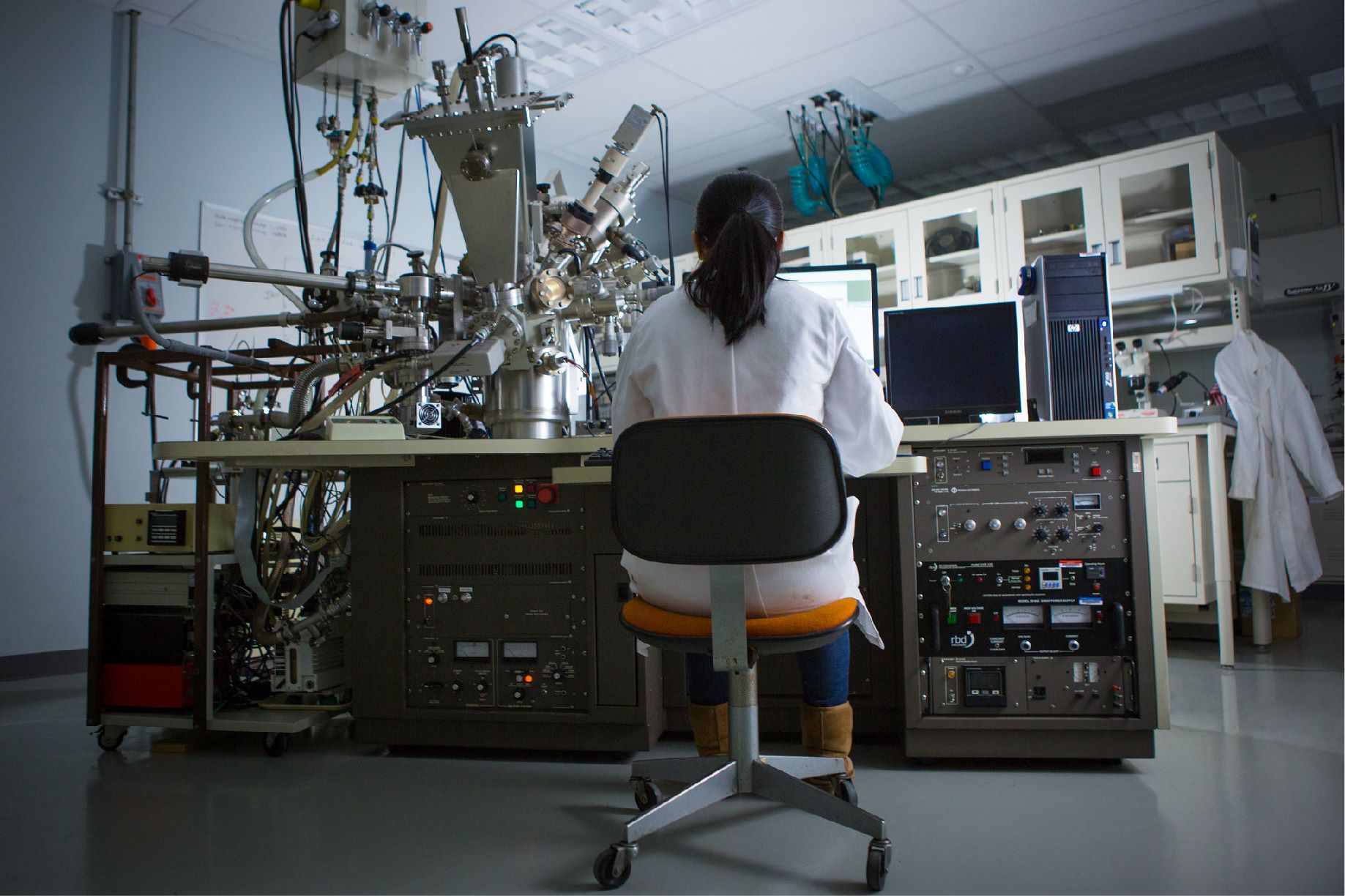
The University of Arizona and WaterTectonics initiated the design of the automated water treatment system in the Spring of 2020, which is the thrust of Task 2. This work included the design of an electrochemical cell by the PI and securing the materials for the cell from ElectroCell North America, Inc. Production of the cell, as well as some of its key components, was delayed because of distance restrictions in factories due to the Covid-19 pandemic. The treatment system was delivered to UA in December 2020. Other accomplishments include experiments performed to determine the energy costs and Faradaic efficiency for electrochemical generation of acid and base from dilute salt solutions.
The project was granted several No-Cost Time Extension (NCTE) due to Covid-19 delays and challenges with securing post-doctoral scholars. These NCTEs resulted in extending Budget Period 1 (BP1) to 5/31/2022.
Progress in BP1 was made in the electrode and membrane fouling, suspended solids removal and treatment costs. Flowback and produced water (FPD) often contains high concentrations of Ca2+ and Mg2+ ions that can form CaCO3 or Mg(OH)2 mineral scale at the high pH values in the cathode compartment of the electrochemical cell. Precipitation of CaCO3 or Mg(OH)2 in solution is not problematic since those precipitates will exit the cell in the catholyte stream. However, precipitation of mineral solids on the electrode surface will block catalytic sites and make patches of the electrode surface electrochemically inactive. In addition, precipitation of mineral solids on the membrane dividing the electrochemical cell will impede ion transport through membrane in areas covered by patches of precipitate. If precipitated mineral solids build up on the electrode or membrane, increasing voltages will be needed to maintain the same current. It has been proven that precipitates on the electrode and membrane can be removed by reversing the polarity of the electrochemical cell. By reversing polarity, the electrode previously serving as the cathode is converted to an anode which produces O2 and H+ via oxidation of water. The H+ ions will dissolve precipitated mineral scale on both the membrane and electrode surface.
Experiments were performed to investigate the effect of iron coagulant dose on suspended solids removal. Water samples with a turbidity of 90 Nephelometric Turbidity Units (NTUs) generated by suspended clay particles were used and treated with Fe3+ coagulant doses of 1.25 to 2.5 mm. In order to test the effectiveness of the coagulation process itself, the treated water samples were not sent through the media filters. Final dissolved iron concentrations ranged from 10 to 13 μm (0.5 – 0.73 mg/L). These values are well below the <10 mg/L guideline for reuse of produced water in hydraulic fracturing. Final turbidity values ranged from 2-4 NTU, which is lower than the recommended <10 NTU for use in hydraulic fracturing.
Treatment costs using this system has been proven to be an order of magnitude lower than conventional electrocoagulation systems. Using this system with Permian Basin waters, the estimated cost per barrel of FPW treated is $0.13/bbl.
Having satisfied all BP1 requirements, the project will advance to BP2 on June 1, 2022.
$935,254.00
$234,725.00
NETL – Bruce Brown (Bruce.Brown@netl.doe.gov or 412-386-5534)
University of Arizona – James Farrell (farrellj@email.arizona.edu or 520-940-0487)