Business

Business
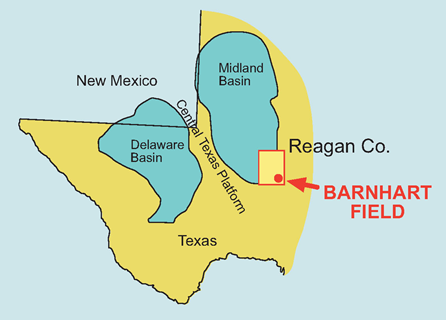
The project goal was to evaluate the applicability of high-pressure air injection (HPAI) in revitalizing a nearly abandoned carbonate oil reservoir in the Permian Basin of West Texas. Successful results can be applied to similar oil reservoirs in other areas of the Permian Basin.
Bureau of Economic Geology
University of Texas
Austin, TX
Goldrus Producing Company
Midland, TX
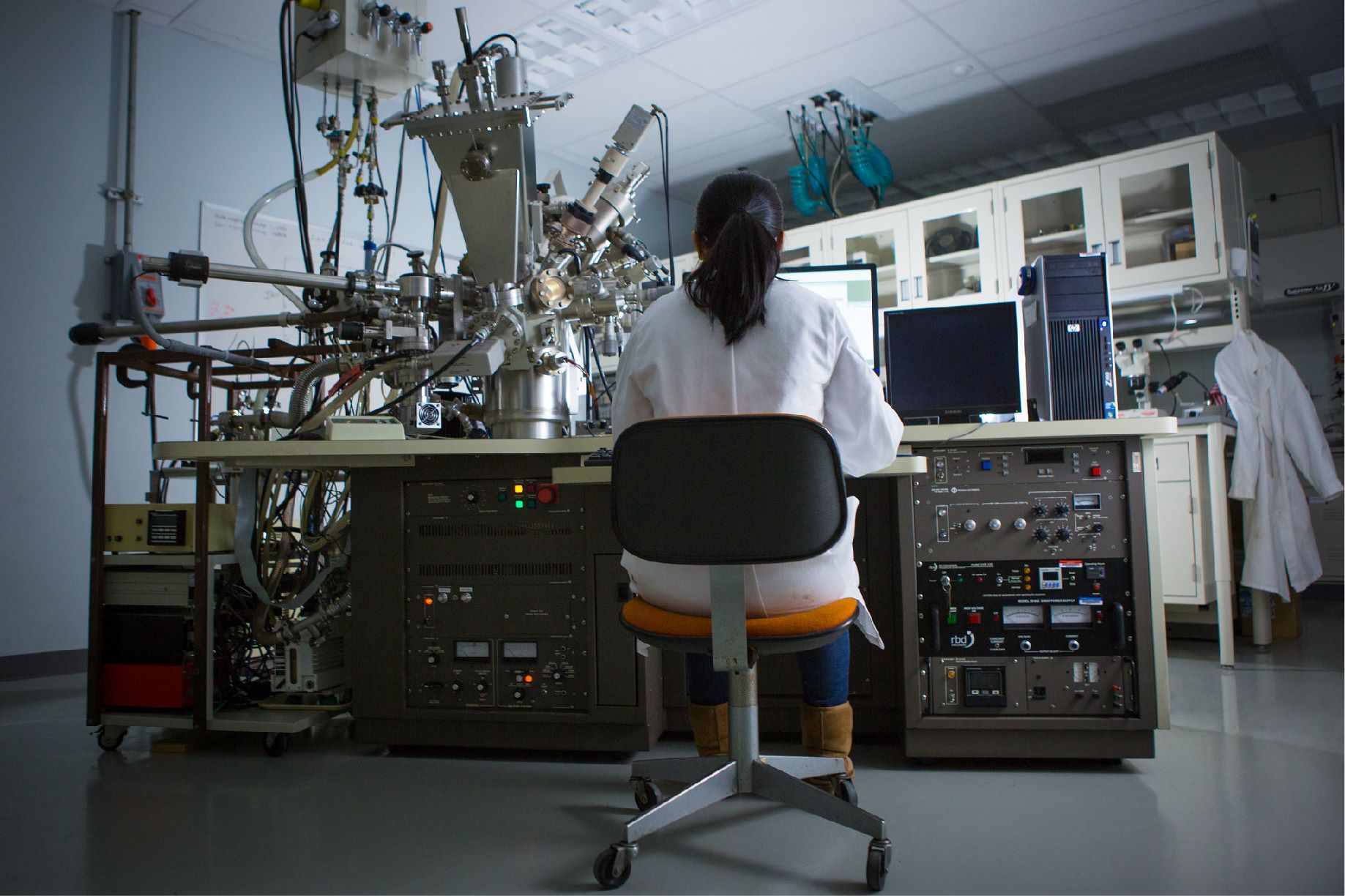
In order to apply HPAI to a reservoir, the stratigraphic architecture must be well-known to understand the movement of fluids within a reservoir. This was accomplished by integrating core and wireline-log data. Laboratory testing has been carried out to quantitatively assess mechanical alterations of reservoir material by the elevated temperatures near the combustion front. Goldrus Producing Company, has demonstrated the effectiveness of HPAI in Ellenburger reservoir rocks in laboratory tests. With the support of the lease royalty owner, researchers successfully deployed a field pilot, consisting of a vertical air-injection well and a horizontal producing well, to test the technology in an actual field setting.
Project Results
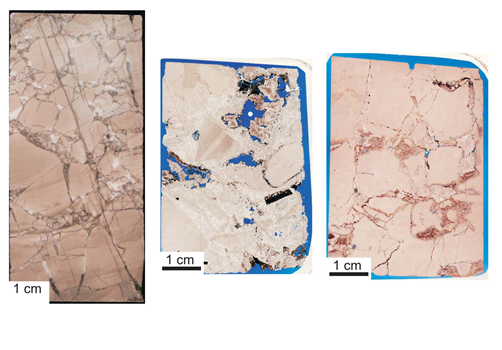
The Lower Ellenburger carbonate reservoir under study has been demonstrated to be a complex fractured reservoir where the fractures were produced by karst (collapsed paleocave) processes. A simulation model was developed based on available laboratory and field data. The model was utilized to perform waterflood and air injection simulation runs in stratified and fractured reservoir environments. The results obtained after an extensive history-matching exercise using combustion tube data indicate that the reservoir under study is a very good candidate for HPAI. Initial field results indicated that HPAI does work in the field. Early results from the pilot demonstrate that the technology is a success in the reservoir. High-pressure air was injected in a test well, and results indicated that combustion took place and a response was recorded in the producing well.
Benefits
This program is designed to help oil and gas operators effectively apply an exciting new technology that has a huge potential for dramatically increasing the recovery of oil from underexploited, mature carbonate reservoirs. HPAI previously has been applied in heavy oil reservoirs but only rarely attempted in light oil reservoirs, where a much greater remaining oil resource lies. Researchers are testing this innovative technology in a carbonate reservoir that, because of pressure depletion, has been nearly abandoned. Success from this study will stimulate application throughout the Permian Basin.
Project Summary
The primary objectives of the project are to develop, test, and document optimal methods for deploying HPAI technology to recover remaining hydrocarbons from an abandoned carbonate reservoir. This will be accomplished in three phases of activity.
The reservoir characterization phase (Phase 1) consists of 1) analysis of the reservoir stratigraphy and facies, 2) characterization and modeling of reservoir matrix petrophysical properties, 3) characterization and modeling of reservoir fractures, and 4) characterization and modeling of the effects of HPAI on reservoir mechanical properties (deformation, strength, and fluid transport behavior) for both matrix and fractures.
The final phase of the project (Phase 3, Technology Transfer) is devoted to compiling, reporting, and distributing the results of the completed project to industry.
(July 2007)
The reservoir characterization phase (Phase 1) of the project is on schedule, but additional advances depend on obtaining new core material. New cores were scheduled by Goldrus, but they have been canceled. A larger demonstration phase (Phase II) has been cancelled by Goldrus because of funding problems. Goldrus was active in searching for partners to help finance the project.. Researchers have presented results in oral presentations and papers. The project has ended.
$416,805
$83,361 (20% of total)
NETL - Virginia Weyland (virginia.weyland@netl.doe.gov or 918-699-2041)
BEG - Robert Loucks (bob.loucks@beg.utexas.edu or 512-471-0366)
Publications
Combs, D.M., Loucks, R.G., and Ruppel, S.C., Lower Ordovician Ellenburger Group collapsed paleocave facies and associated pore network in the Barnhart field, Texas, in Hunt, T.J., and Lufholm, P.H., The Permian Basin: Back to Basics, West Texas Geological Society Fall Symposium, West Texas Geological Society Publication #03-112, 2003, p. 397-418.
Dhiraj, Dembla, Stimulating enhanced oil recovery (EOR) by high-pressure air injection (HPAI) in west Texas light oil reservoir, 2004, University of Texas at Austin Petroleum Department thesis, 123 p.