Business

Business
The goal of this project is to develop new, innovative technologies for natural gas storage.
Clemson University (CU) – project management and research product
Cabot Oil & Gas Corporation – data and information on carbonates
DB Consultants, Inc. – technical liaison
Location:
Clemson, South Carolina 29634
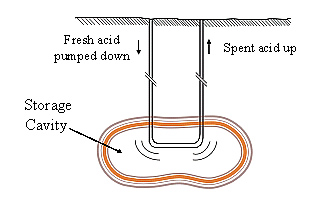
The objective of this project is to assess the feasibility and economic viability of an innovative concept for developing underground gas storage in carbonate rock using procedures that involve hydraulic fracturing and acid dissolution.
Because of a lack of conventional gas storage near some major gas market centers, and the projected growth in demand for storage capacity, many of these areas are likely to experience shortfalls in gas deliverability. Since conventional storage formations (depleted gas reservoirs or salt formations) are nearly non-existent in many areas, alternatives to conventional methods of gas storage are needed. To help meet this need, this project assesses the feasibility of developing underground storage capacity by creating caverns in rock formations through hydraulic fracturing and acid dissolution.
The goal of the project is to develop and assess the feasibility and economic viability of an innovative concept that may lead to commercialization of new gas storage capacity near major markets. The investigation involves a new approach to developing underground gas storage in carbonate rock, which is present near major markets in many areas of the United States. Because of the lack of conventional gas storage and the projected growth in demand for storage capacity, many of these areas are likely to experience shortfalls in gas deliverability. Since depleted gas reservoirs and salt formations are nearly non-existent in many areas, alternatives to conventional methods of gas storage are required. The need for improved methods of gas storage, particularly for ways to meet peak demand, is increasing. Gas market conditions are driving the need for higher deliverability and more flexibility in injection/withdrawal cycling. In order to meet these needs, the project involves an innovative approach to developing underground storage capacity by creating caverns in carbonate rock formations by hydraulic fracturing and acid dissolution.
At the start of the project, data for carbonate producing formations was compiled using the gas atlases for the Rocky Mountains, Texas, Mid-Continent, and Appalachian regions. The compilation included averages and ranges of porosity, permeability, depth, and thickness. Geographic Information Systems (GIS) software was used to produce integrated maps (structural contour, depth to top of carbonate, thickness, occurrence of carbonate over specific depth ranges, and occurrence of limestone over specific depth ranges) for each of the carbonate units.
To analyze the dissolution process' potential for creating storage volume, the following aspects were examined: weight and volume of rock to be dissolved; gas storage volume, pressure, and temperature at depth; rock solubility; and acid costs. Hydrochloric acid was selected because of low cost, high acid solubility, fast reaction rates with carbonate rock, and highly soluble products (calcium chloride) that allow for the easy removal of calcium waste from the well. Despite certain advantages over inorganic acids, the cost of using organic acids was determined to be prohibitive.
A design was developed for the dissolution process that incorporates proven technologies for drilling wells, storing and pumping inorganic acids, and treating the aqueous waste streams exiting the underground storage cavern. A preliminary economic analysis of the design considered capital costs, well-design options and costs, waste treatment options, and comparison with other gas storage options. Optimum rock type and rock properties, which varied significantly with depth, were identified. Results of this analysis revealed that the fracture-acid dissolution method is competitive with other methods of creating underground storage.
Design considerations and economic calculations indicate that fracturing and dissolution can be applied most advantageously to carbonate formations deeper than 4000 feet, with limestone at depths between 6000 and 9000 feet the preferred choice. Large areas of West Virginia, Pennsylvania, and New York were found to be potentially suitable for developing gas storage in carbonate rock using this technology.
The next phase of this investigation will include detailed analysis and modeling of the processes involved in creating storage capacity, including induced fracturing and acid dissolution of the rock. Numerical process models will be developed for creating storage capacity, modeling of storage performance, and evaluation of field characterization methods. The third and final phase of the investigation will include modeling field performance, preparing a final design, and performing a detailed economic analysis. The purpose of the final design will be to facilitate a full-scale deployment of the new technology. Subsequent demonstration of the commercial potential of gas storage in carbonate rocks will open up new geographic alternatives for developing storage capacity.
$708, 176
$756,906
NETL – Anthony Zammerilli (304-285-4641 or Anthony.zammerilli@netl.doe.gov)
CU – James Castle (jcastle@clemson.edu or 864-656-5015)
SPE paper - "Design and Feasibility of Creating Gas-Storage Caverns By Using Acid to Dissolve Carbonate Rock Formations" [PDF-537KB]
Topical Report - May 2005 - Clemson University - "Fracture Dissolution of Carbonate Rock: An Innovative Process for Gas Storage" [PDF-3106KB]
Topical Report - March 2004 - Clemson University - "Fracture Dissolution of Carbonate Rock: An Innovative Process for Gas Storage" [PDF-40590KB]