Business

Business
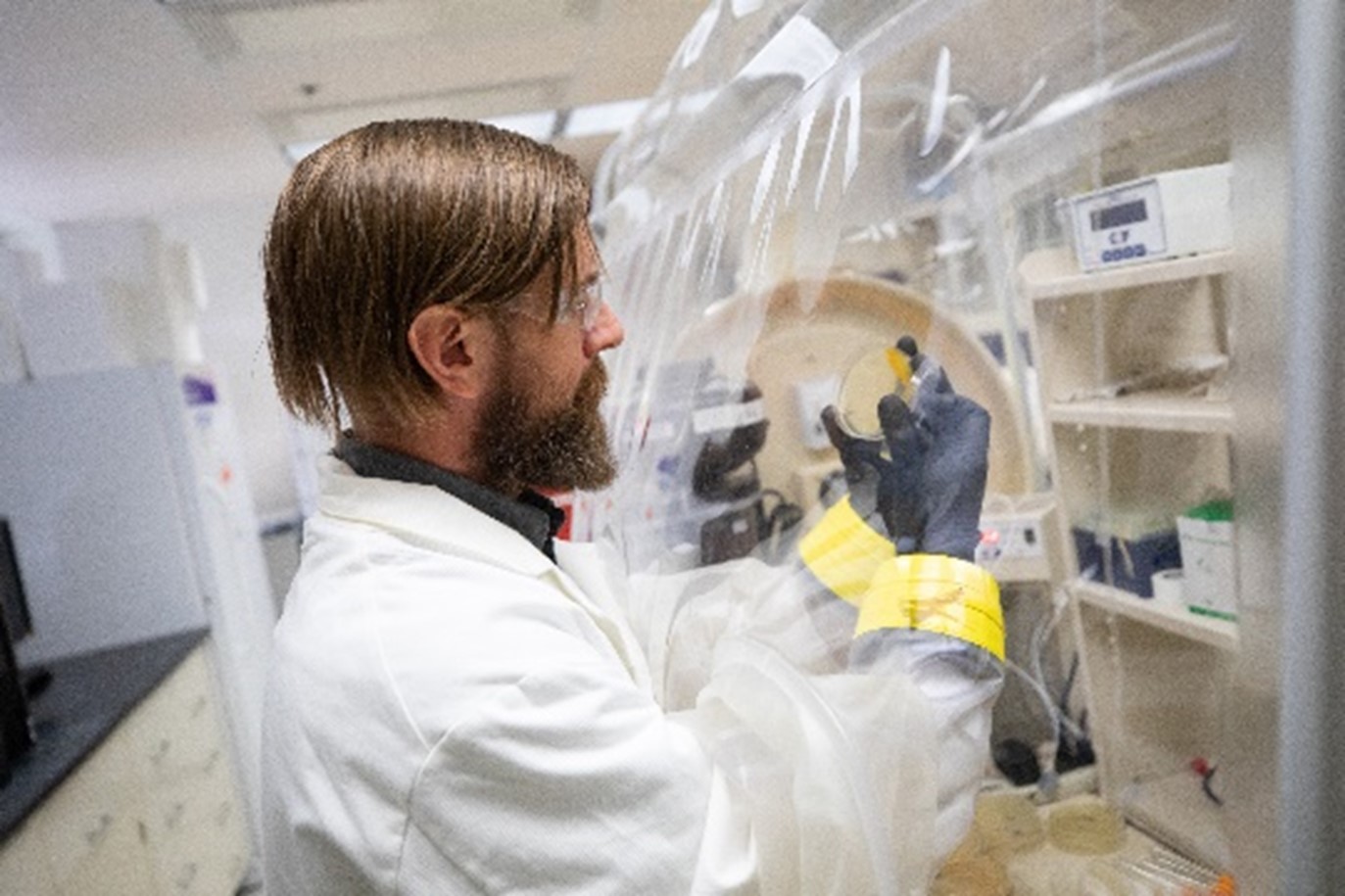 NETL has developed a unique biocatalyst that is robust to environmental challenges and adaptable to feedstock and condition variability.
To combat climate change and move towards a circular carbon economy, technologies are needed to capture, store, and/or convert waste carbon. Microbial gas fermentation is one approach that exploits the natural ability of microorganisms to capture and utilize gaseous waste feedstocks.
The NETL process uses an enriched microbial biocatalyst to convert carbon into acetate and other short-chain fatty acids. The innovation represents an improved way for direct conversion of carbon dioxide (CO2) and CO waste gases into value added products with a lower carbon footprint and energy inputs compared to current methods for production of commercial short-chain fatty acids.
The global acetic acid market is estimated to be $21.5 billion and projected to reach $34.2 billion by 2030.
The invention is available for license and/or CRADA.
Challenge
To combat climate change, slow CO2 emissions, and move towards a circular carbon economy, technologies are needed to capture, store, and/or convert waste carbon. Microbial gas fermentation is one approach that exploits the natural ability of microorganisms to capture and utilize gaseous one-carbon waste feedstocks.
Reducing the flow of greenhouse gasses, such as CO2, into the atmosphere is an important step in mitigating global warming. One strategy to utilize CO2 involves its biological conversion into value-added compounds such as ethanol and acetic acid. NETL researchers found a way for microorganisms to use gaseous and liquid carbon substrates to produce a variety of value-added compounds. Using non-fossil-based, renewable feedstocks, this technology can be harnessed to reduce CO2 emissions and provide an avenue towards a global circular carbon economy with needed marketable products.
Advantages
Currently, fossil fuels are the foundation of energy and chemical demands. To help alleviate greenhouse gas emissions and move towards more sustainable and environmentally friendly production, alternative strategies are required. Other feedstocks used in industrial fermentations are energy intensive and costly. Using carbon feedstocks from non-food and sustainable resources, such as industrial waste gases (CO2, CO, syngas), and natural and shale gas (methane), provides an inexpensive and abundant feedstock that can reduce greenhouse gas emissions and help bridge the gap to a circular global carbon economy.
For more information Contact Us