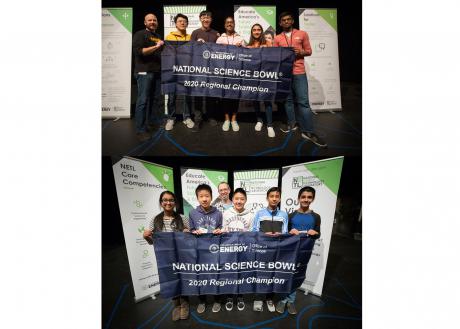
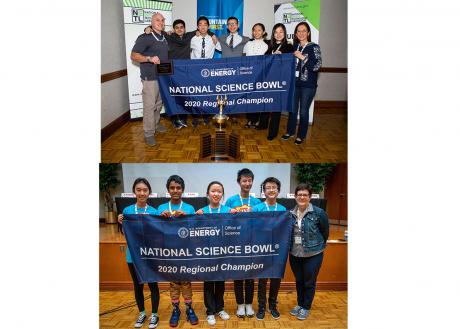
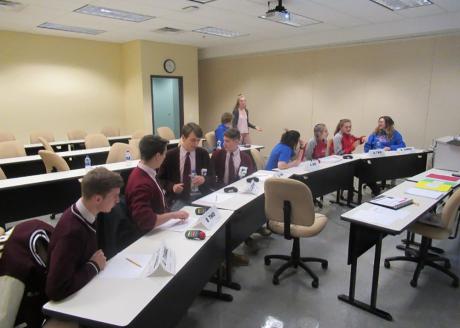
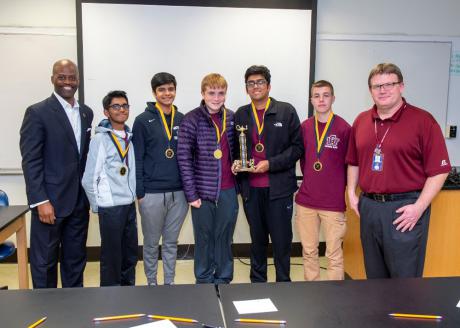
North Allegheny Senior High School, and North Allegheny School District’s Marshall Middle School Team 1 claimed victory at the 29th annual Western Pennsylvania Regional Science Bowl (WPASB), organized and sponsored by NETL.
The event was held Feb. 22 and 29, 2020, at the Community College of Allegheny County (CCAC) South Campus in West Mifflin, Pennsylvania. Forty teams from high schools and 32 teams from middle schools throughout the state participated in the competition.
As the world enters a new decade, change is on the horizon — especially in science, technology, engineering and math (STEM).
According to Forbes, women in the U.S. currently earn the majority of bachelor’s degrees; however, they are underrepresented in fields such as computer science, engineering and mathematics. Additionally, women who earn science and engineering degrees often do not go on to careers in those paths.
The Lab’s K-12 STEM Education & Outreach team assisted several events and led site tours of NETL-Morgantown throughout the month of January. The team also attended events surrounding the integration of technology into education in order to understand how the process of learning will change in an increasingly technology-dependent world.
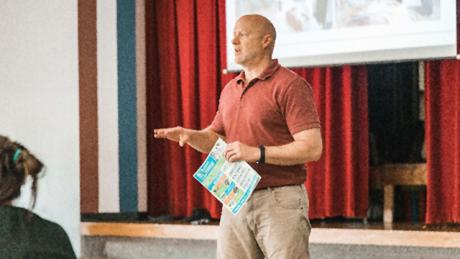
On a brisk winter morning, teachers Jill Jakub and Kelly Bandik spoke in warm, glowing terms about the strong partnership between their school and NETL.
The West Virginia Science Bowl tested students’ knowledge of math and science with round-robin and double-elimination competition rounds. Middle school teams competed Friday, followed by high school students on Saturday. This year’s West Virginia competition included welcoming remarks from Congressman David McKinley, as well as representatives from NETL and WVU. Participants also explored hands-on engineering activities and an academic information fair from institutions around the state.
As NETL’s new STEM education and outreach specialist, dedicated to boosting the Lab’s community impact and improve educational outcomes in West Virginia, Kinsey Walker aims to expand student participation in this vitally important subset across the state through unity among program providers.
NETL’s K-12 STEM Education & Outreach team provided support services during three West Virginia Regional Science Bowl (WVSB) Regional Education Service Agency (RESA) qualifying competitions in December. The competitions determined which middle and high school teams will compete in the main WVSB event, to be held Feb. 8-9 at West Virginia University in Morgantown.
The winning teams from the WVSB will win an all-expenses-paid trip to Washington D.C. to compete in the annual National Science Bowl in April.
NETL’s K-12 STEM Education & Outreach team engaged students during several day-long visits at area elementary schools, conducted an educational energy workshop for teachers, assisted in a cybersecurity competition and aided two preliminary West Virginia Science Bowl (WVSB) regional qualifying events in November.
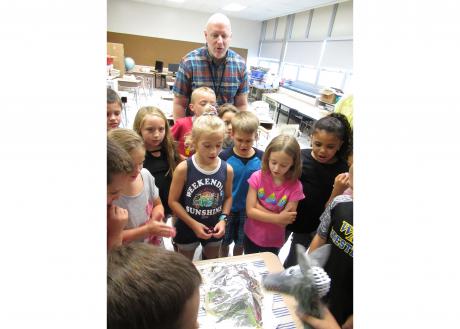
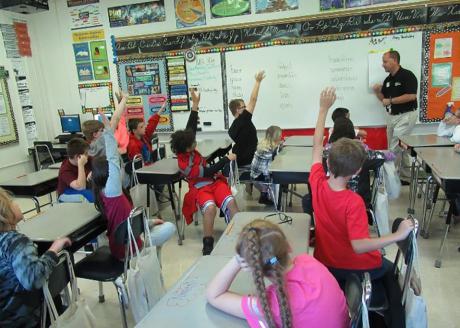
NETL’s K-12 STEM Education & Outreach team members facilitated active learning experiences at several elementary schools throughout September and October, fostering the next generation of energy experts through engaging activities involving science, technology, engineering and math (STEM) subjects. Additionally, ambassadors from the Lab’s STEM Ambassador program provided information about careers in energy to spread the Lab’s mission to secure and enhance the nation’s energy foundation while protecting the environment.
NETL K-12 STEM Education & Outreach program lead Ken Mechling served as a co-presenter at the Energy “Train the Trainer” Teacher Workshop in the Ridgway School District in Ridgway, Pennsylvania, Aug. 15. During the workshop, educators and administrators learned more about topics surrounding energy and ways to incorporate science, technology, engineering and math (STEM) learning into the classroom.