 Share
Share Contact
Enhancing the economic and operational performance of the existing coal fleet through byproduct utilization, fuel flexibility, and improved efficiency
The Optimize mission under the Power and Capture Program is focused on improving the efficiency and cost performance of coal-fired power plants to enhance near-term grid reliability. By integrating innovative technologies, this initiative seeks to maximize plant value across four key technical areas:
- Waste Stream Conversion: Capturing and converting plant waste streams (wastewater, sulfur dioxide (SO2), and coal combustion residuals (CCRs)) into valuable co-products to diversify revenue. This technical area aims to validate advanced CO2 capture technologies as well;
- Fuel Flexibility: Enabling rapid fuel switching between coal and natural gas (dual firing) and coal/natural gas co-firing capabilities;
- Digital Transformation: Integrating advanced sensors and controls, diagnostics, and digital twins into plant operations by leveraging super intelligence (SI) and machine learning (ML); and
- Carbon Capture Test Centers: Validating transformational CO2 capture technologies under real-world environments.
Additional areas include repowering existing plants, focusing on boiler islands and power cycles, and integration with energy storage.
The Coal Center of Excellence focuses on activities to optimize the existing coal plant value chain, including in-service materials characterization for life extension, advanced controls for dynamic operability, digital twin – boiler tube failures and advanced scientific computing with wafer-scale engine technology.

Solicitations
Power & Capture Interactive Projects Map

Transforming Waste Streams into Valuable Co-Products
This technical area aims to diversify coal plant revenue streams through two key focus areas:
- Maximizing Value from Plant Waste: The Research, Development, and Demonstration (RD&D) activities under this effort aim to capture plant waste streams, including coal combustion residuals and environmental control residuals, and convert them to value added products to diversify coal plant revenue streams.
- Wastewater Management: The RD&D activities under this effort aim to develop transformative wastewater management systems to cost-effectively recover water and valuable byproducts from wastewater streams, ultimately minimizing water consumption and discharge in power plant operations.
Improving Operational Flexibility
The RD&D efforts under this technical area focus on the design, development, and implementation of transformational, fuel-flexible systems for existing coal power plants. Efforts focus on:
- Dual-Firing Retrofits: To enable automatic, seamless switching between coal and natural gas without degrading critical operational performance.
- Co-Firing Systems: To advance coal–natural gas co-firing components, such as fuel-flexible burners and advanced control systems, to maximize natural gas integration and emission reductions with minimal impact on plant efficiency.
Advanced Sensors & Controls, Diagnostics, and Digital Twins
This technical area leverages advanced combustion, materials, SI/ML, and additive manufacturing to optimize existing facilities. The RD&D efforts focus on validating advanced sensors and diagnostics while building digital twins to maximize plant efficiency, reliability, and longevity, ultimately bolstering national energy security.

Test Centers
This technical area supports operation of carbon capture testing centers that can provide real-world environments to validate and advance transformational capture technologies.

The National Carbon Capture Center (NCCC), DOE’s primary carbon capture test facility, operated and managed by Southern Company, provides a platform for testing and evaluating third-party technologies at bench- and engineering-scale, bridging the gap between laboratory research and large-scale demonstrations.

The Wyoming Integrated Test Center (ITC), located at Basin Electric Power Cooperative’s Dry Fork Station in Gillette, Wyoming, is also utilized by NETL for testing of post-combustion carbon capture and utilization technologies. The ITC is focused on larger scales of testing to complement the testing performed at the NCCC. The ITC features five small test sites and one large test site, utilizing up to 20-MW equivalent of coal-based flue gas from the power plant.

The Energy & Environmental Research Center (EERC) at the University of North Dakota has more than 54,000 square feet of demonstration facilities that accommodate a variety of technologies. The EERC’s combustion test facility (CTF) contains seven pilot-scale units to demonstrate the combustion of solid and liquid fuels such as coal, biomass, sewage sludge, and oil slurries. The units focus on operational issues and environmental emission control. These units provide a cost-effective way of testing fuels and system components prior to full-scale testing.
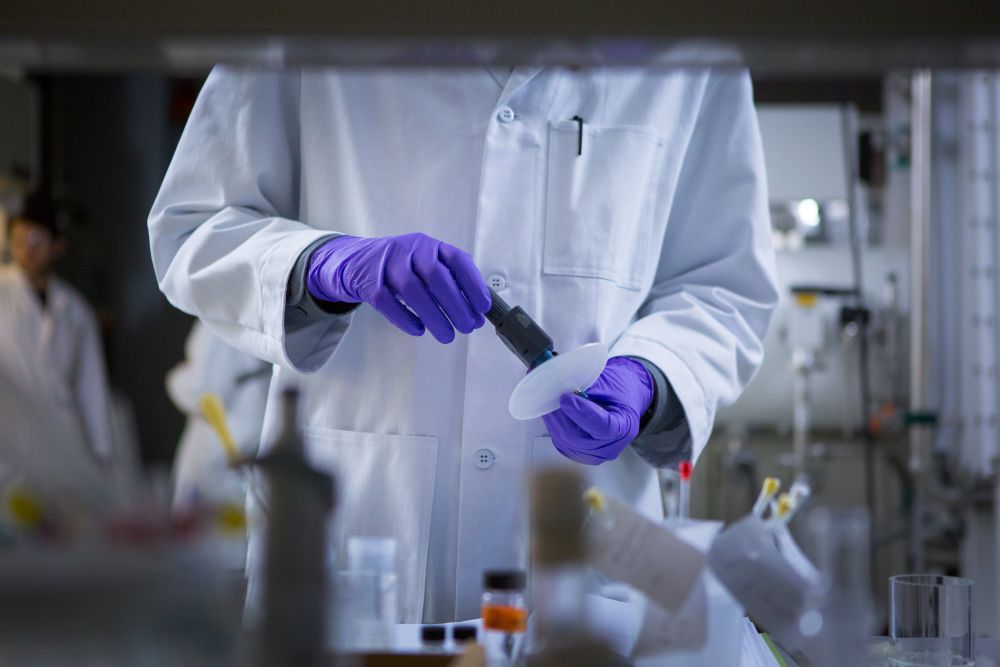
NETL's Gas Separations Center accelerates technology deployment and reduces technical risk for the energy sector through high-impact, collaborative R&D. The center partners with industry leaders to validate emerging separation technologies using a fully integrated suite of platforms including laboratory-scale material evaluation, bench-scale module validation, and pilot-scale prototype testing. Designed to support upstream and midstream priorities, our facility focuses heavily on CO2 capture, conditioning, and purification for enhanced hydrocarbon recovery.