
 Share
Share Contact
The Mining and Critical Minerals Workforce Hub is a coordinated, data-driven workforce integration platform supporting domestic mineral recovery from coal, fly ash, and acid mine drainage (AMD) across extraction, processing, refining, and advanced manufacturing.
RWFI Home Strategic Priorities Occupation Explorer
System Challenge
Expertise Gaps
Declining metallurgy and limited rare earth elements refining programs
Regional Focus
Appalachia First
Expanding to a national readiness framework
Goal
U.S. Mineral Independence
Expanding talent across the U.S. critical minerals supply chain
RWFI’s Mission
The Regional Workforce Initiative (RWFI) functions not as a training provider, but as a workforce integration platform—delivering analytics, coordination, and tools that enable federal, industry, and educational partners to scale mineral-to-material innovation.
1. Needs and Gaps Analysis
Linking Standard Occupational Classification (SOC)and the North American Industry Classification System (NAICS) to scale-up phases
2. Readiness Scans
Skill adjacency and labor availability
3. Online Playbook
Identifying pathways for energy workers and energy careers
Systemic Workforce Challenges
The domestic supply chain faces critical constraints and shifting demographics that require coordinated national workforce planning.
Retirement Wave
More than 220,000 miners (roughly 50% of the workforce) are expected to retire by 2029, creating an urgent need for knowledge transfer and talent pipeline development.
Educational Gap
U.S. mining schools have dropped from 25 to 14 since 1982, graduating only ~200 engineers annually against a continuously expanding national demand.
Skills Modernization Gap
Modern mining increasingly relies on automation, remote operations, advanced sensing, data analytics, and electrified equipment, necessitating an upskilled workforce.
Mining and Critical Minerals 101
These introductory videos provide baseline content.
More NETL critical minerals videos
Strategic Priorities
The top priorities of the RWFI call for expanding advancing workforce capacity across extraction, processing, refining, materials engineering, and advanced manufacturing to support U.S. mineral independence.
1. Comprehensive Workforce Analytics
Developing a quantitative Workforce Needs and Gaps Analysis is crucial to evaluate workforce transferability from multiple energy sectors into processing and alloy development and other components of the critical minerals mining supply chain.
2. Workforce Readiness
Implementing regionally focused Workforce Readiness Scans will begin in Appalachia and expand nationally, examining skill adjacency and scaling potential under multiple tech scenarios.
3. Strategic Workforce Integration
Workforce analysis will be aligned with workforce analysis with federal planning, administrative priorities, and industry needs prioritization processes.
4. Industry and Education Alignment
Catalyzing discussion and communication with mining operators, processors, the defense supply chain, universities, and community colleges will align credential pathways with evolving mineral technologies.
5. Digital Infrastructure
Expanding this Hub and the online Workforce Playbook will provide interactive dashboards, readiness indicators, and transition pathways.
Workforce Needs and Gaps Explorer
This tool connects occupational demand to SOC classifications and addresses the systemic challenge of mapping skill adjacencies for research-, pilot-, and commercial-scale staffing needs.
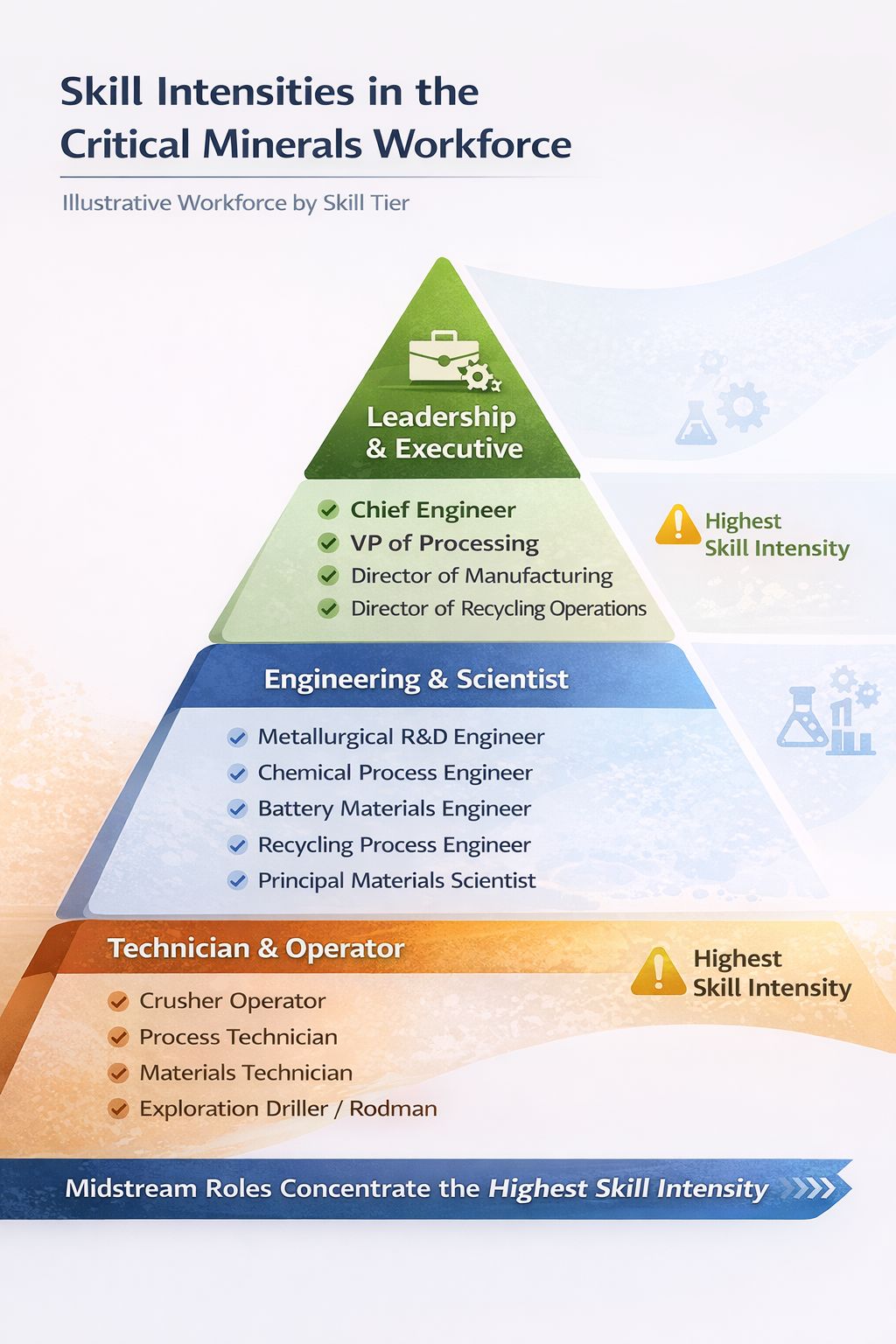
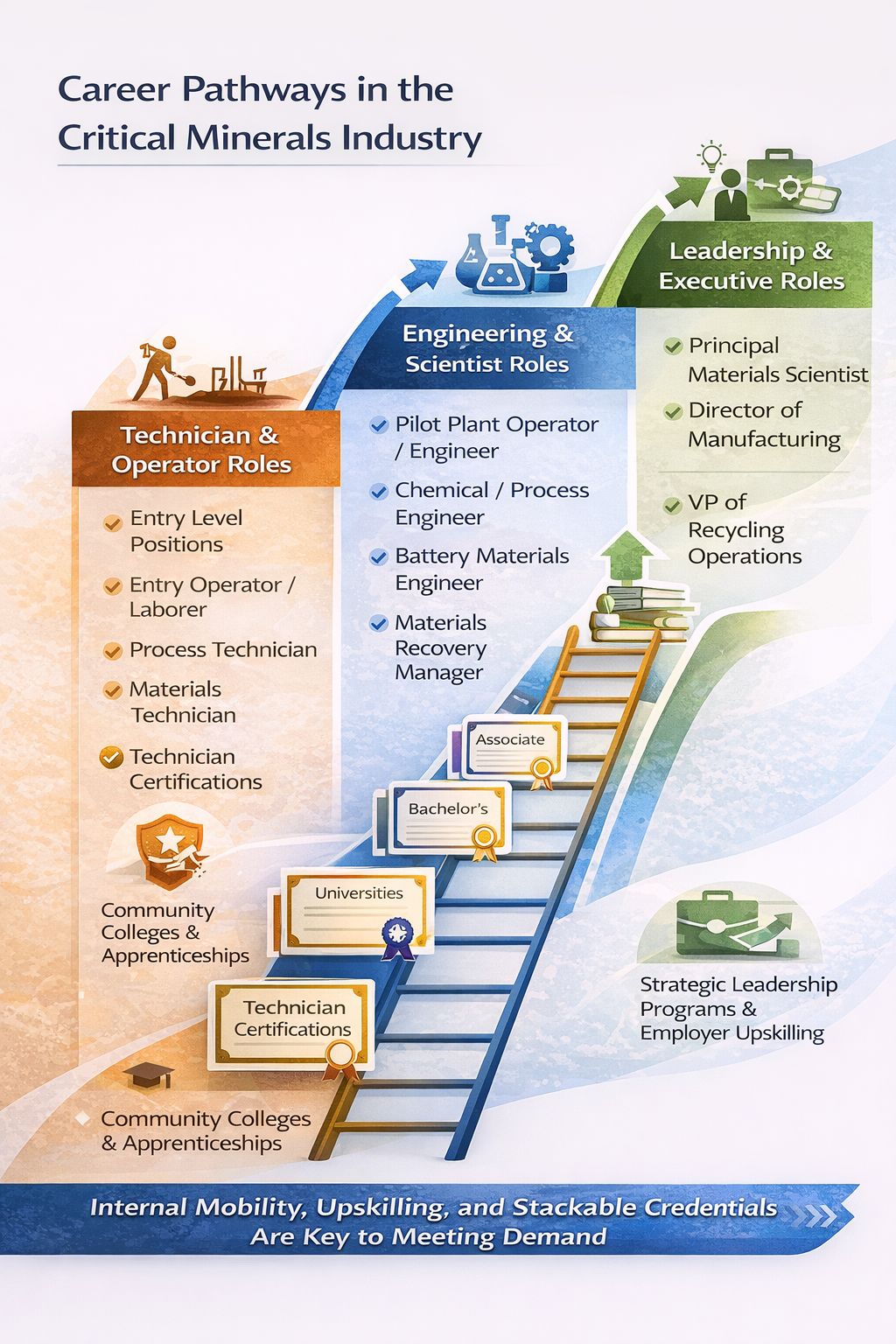
Infographics and Visual Context
This visuals communicate structure, bottlenecks, and investment logic.
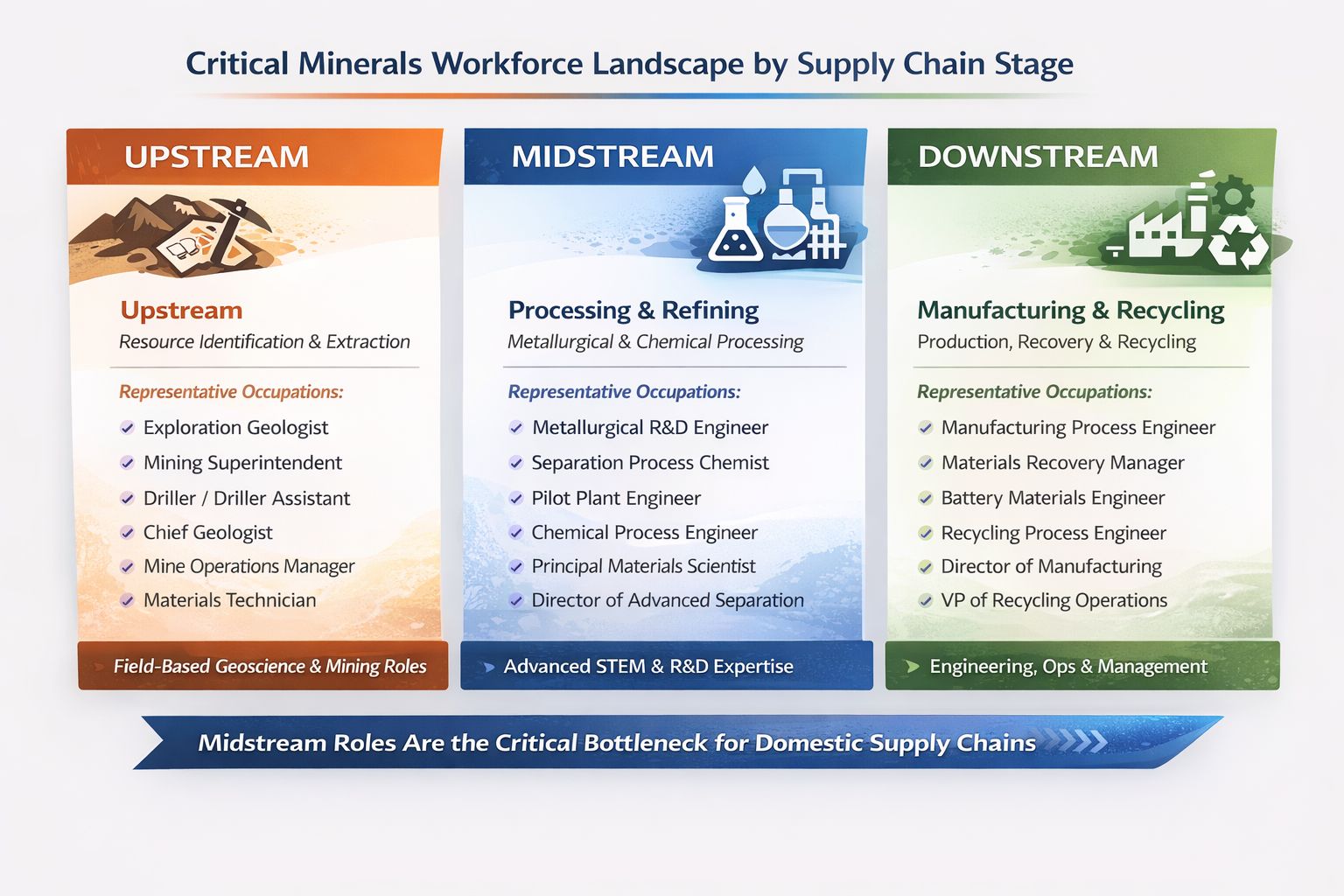

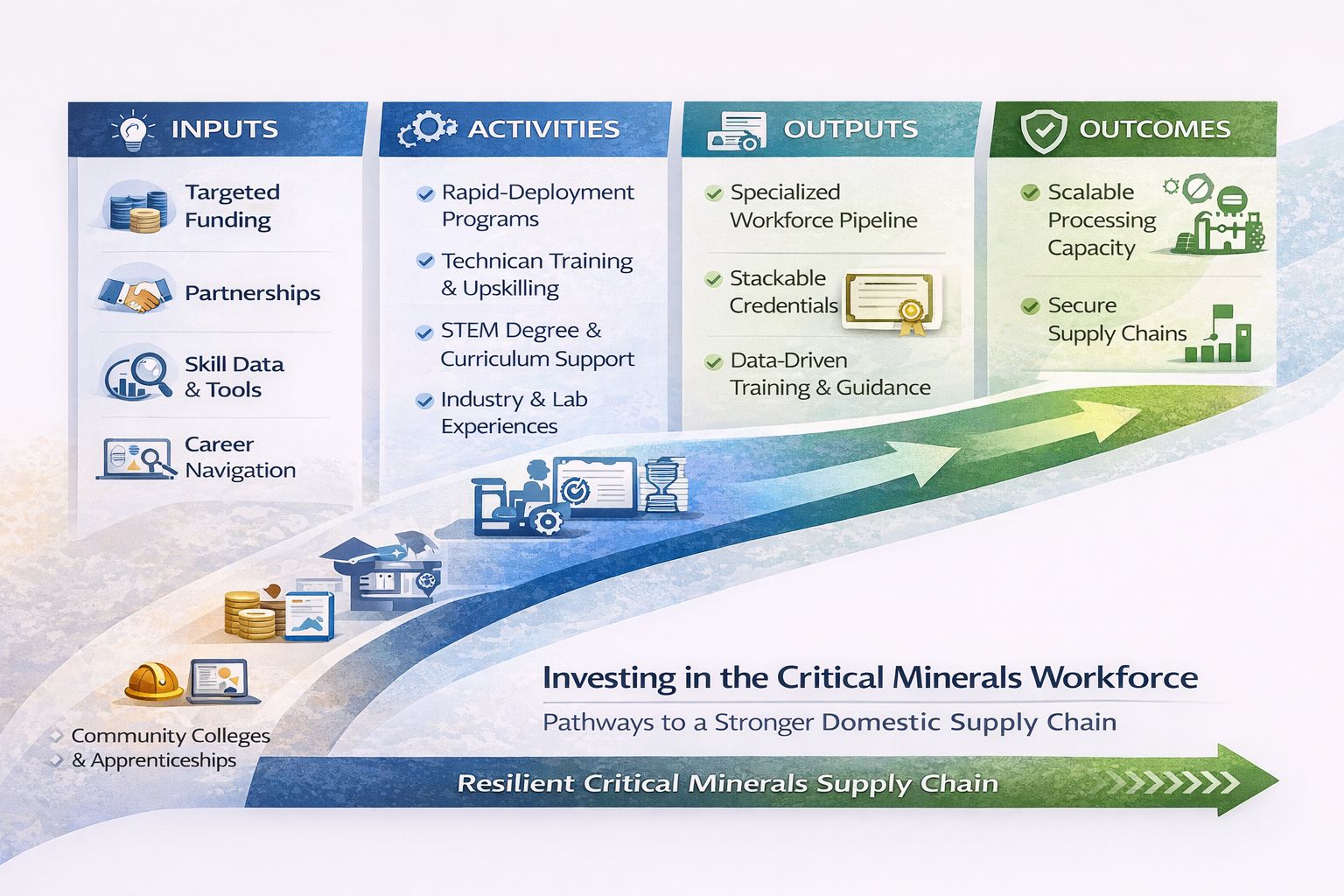
Investing in Critical Minerals Workforce
Connects funding, partnerships, data/tools, and career navigation to supply chain outcomes.
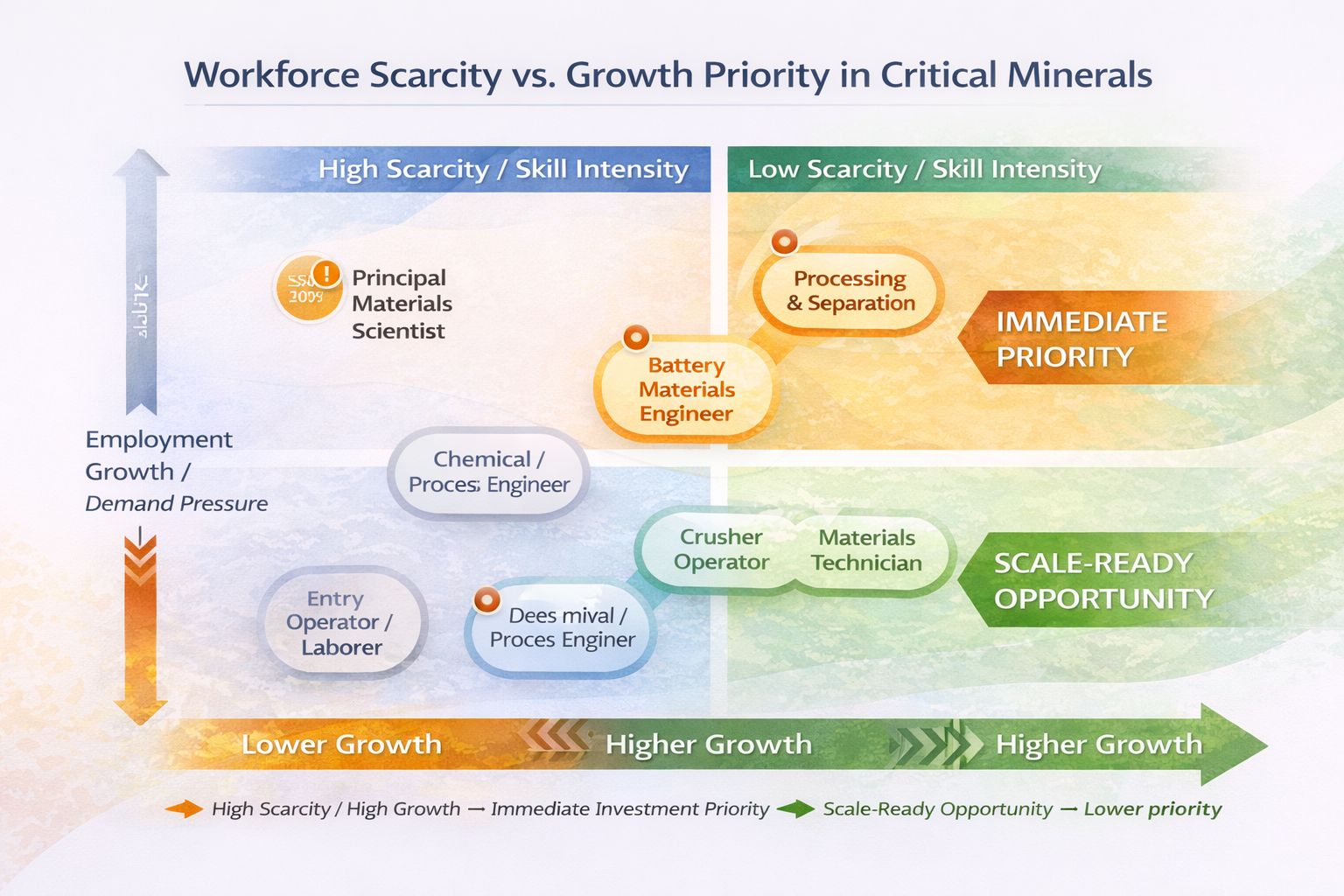
Helps prioritize workforce investments by pairing scarcity/skill intensity with demand pressure.
More Resources
Below are key initiatives, research facilities, and federal offices supporting critical minerals innovation.
Core-CM Initiative
The Carbon Ore, Rare Earth, and Critical Minerals (CORE-CM) Initiative
METALLIC Facility
The Minerals to Materials Supply Chain Research Facility
DOE Office of CMEI
U.S. Department of Energy’s Office of Critical Minerals & Energy Innovation